
Bridesmaid Dresses
Mismatched Bridesmaid Dresses: How to Mix Styles in One Color
Oct
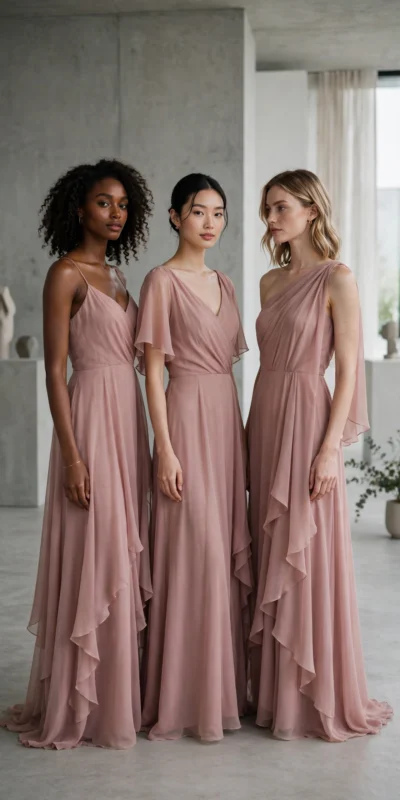
Mismatched bridesmaid dresses let each bridesmaid wear a different style while the party still looks like one group. The trick is simple: fix one element across every dress and let the rest vary. Most brides fix the color and let each bridesmaid pick the neckline, sleeve and length that suits her. That single shared color holds the photos together, even when the dresses are nothing alike. Start with the bridesmaid dresses in your wedding color and build the mix from there.
What are mismatched bridesmaid dresses?
Mismatched bridesmaid dresses vary in style, color or fabric instead of repeating one identical gown across the party. The most common version keeps one color and changes the silhouette, so each bridesmaid wears a cut she likes while the group still matches in photos.
Four ways to mix work in practice. Most parties use one of these four, not all of them at once.
- Same color, different styles: the easiest to plan, one shade with different silhouettes.
- Same style, different colors: one silhouette the whole party loves, in different shades.
- Different shades of one color: a soft tonal range, like blush through dusty rose.
- Mixed fabrics: texture contrast, pairing chiffon with satin or velvet.
A group order keeps every dress in the same color and size run, so nothing drifts between separate orders. Real parties show the idea best, and our real weddings page collects photos of bridesmaids wearing the mix at actual weddings.
How do you make mismatched bridesmaid dresses look intentional?
Fix one element across every dress and let only the rest vary. One shared color, one shared fabric or one shared length tells the eye the variation is a choice, not an accident. Varying color, fabric, length and neckline all at once is what makes a party look random.
Swatches make the plan real. Order free fabric swatches first and compare them in your own light, next to your flowers and your venue photos. One swatch per color is enough, and the whole party should agree on it before anyone orders. Then let each bridesmaid try her style at home. Home try-on lets each woman check her fit and comfort in her own space before the group order goes in. A shared mood board with the swatch, the palette and the approved styles keeps everyone inside the plan.
Should mismatched bridesmaid dresses be the same color or different colors?
Same color is the safer choice and the one most brides pick. One shade across different silhouettes guarantees the group reads as a unit in photos, while different colors need a tight palette and more careful planning to stay balanced.
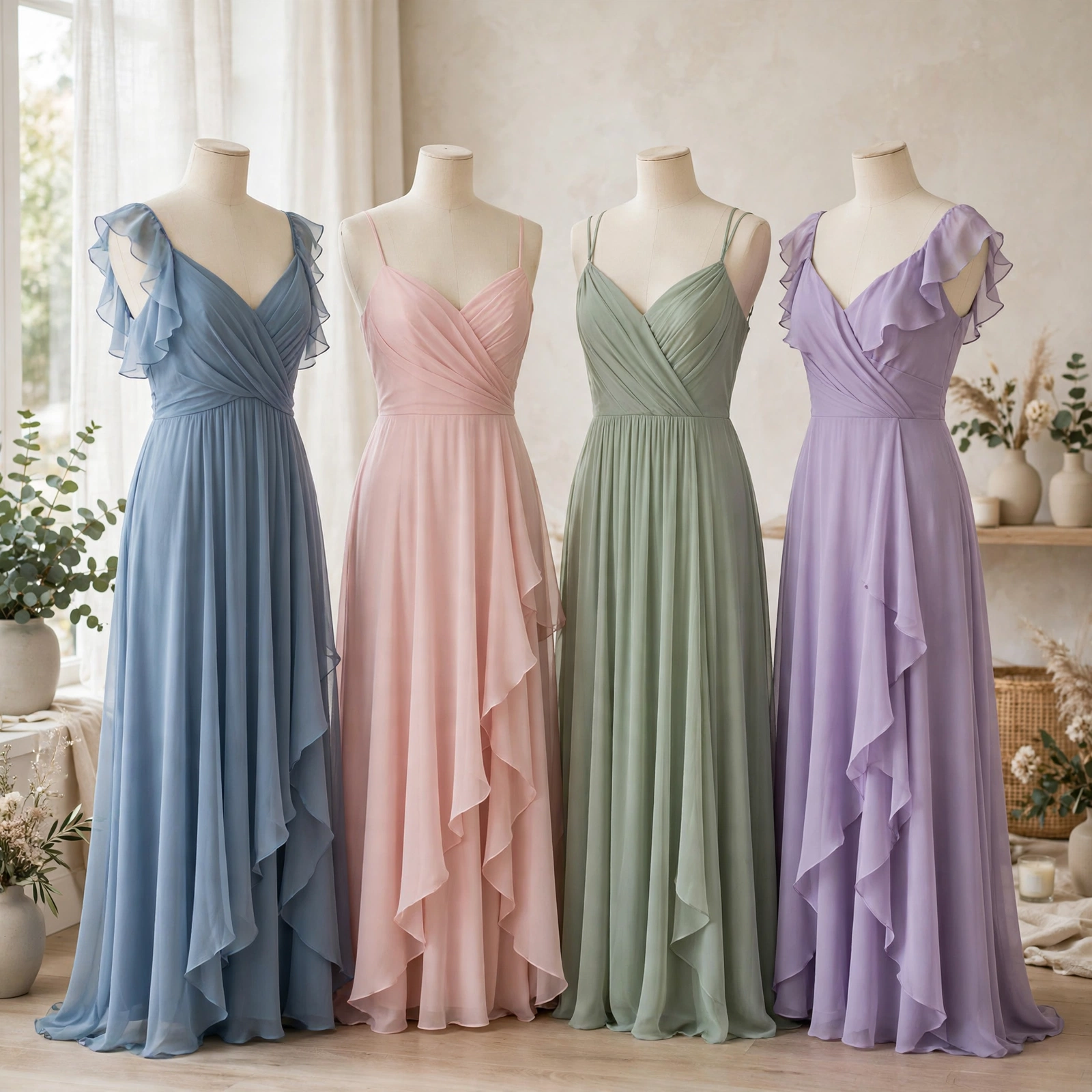
Different colors work when the palette is small. Pick three to five shades from one family, such as dusty blue, sage and lavender, or blush, rose and mauve. Give each bridesmaid her shade rather than letting her pick freely, and keep the fabric the same so the texture ties the colors together. Avoid white, ivory and cream, which belong to the bride. The wedding dresses in your party set the tone, so match the bridesmaid palette to the bride’s gown and the venue, not to a trend photo alone.
What fabric works best for mismatched bridesmaid dresses?
Chiffon is the most forgiving fabric for a mismatched party. It drapes the same way across different cuts, photographs softly in daylight and stays light through a long day. Satin suits formal evenings, velvet suits winter, and crepe suits clean modern lines.
One shared fabric is the second strongest anchor after color. When the fabric matches, different necklines and lengths still feel like one collection. Mixing fabrics works too, but keep it to two: chiffon with satin, or crepe with mesh. Three or more textures in one party start to fight each other in photos. Season decides the fabric more than style does. Velvet in summer feels heavy and photographs dark, while chiffon in winter looks thin next to heavy suits. Sizes run 0 to 30, and custom sizing fits dresses to your own measurements when standard sizes sit between two sizes.
How do you choose mismatched dresses for different body types?
Let each bridesmaid pick the silhouette that fits her body and keep the color fixed. A-line cuts suit most body types, empire waists suit tall frames, and wrap styles suit curves. The shared color does the matching work, so the cuts can differ freely.
Necklines matter more than skirt shapes. V-necks lengthen the torso, sweetheart necklines suit fuller busts, and halter necklines suit broad shoulders. Sleeves solve the most common worry: flutter sleeves and cap sleeves cover upper arms without adding weight. Length should stay consistent within the party, so pick floor length or midi for everyone and vary only the top half. Check the size guide before ordering, and measure bust, waist, hips and hollow to hem with help from a friend.
Can mismatched bridesmaid dresses go wrong?
Yes, when too much varies at once. Different colors, different fabrics, different lengths and different necklines in one party read as random, not styled. The fix is to lock one element, usually the color, and change only one or two others.
The other common mistake is letting each bridesmaid order on her own. Separate orders drift: dye lots change, sizes get guessed, and one dress arrives in a different shade. One group order with one swatch prevents all of that. If a dress still feels off, check it against the plan before the wedding, not on the day. A dress that breaks the color rule or the fabric rule is the one to swap. The FAQ page answers timing and ordering questions for the whole party.
Frequently asked questions
Do mismatched bridesmaid dresses need the same fabric?
No, but one shared fabric makes the mix easier. Same fabric across different styles is the safest version of the look. Mixing two fabrics works when the colors match and the textures sit in the same family.
How many colors should mismatched bridesmaid dresses have?
Three to five shades from one color family. One color is simplest. More than five shades in one party splits the photos into too many blocks and the group stops reading as one unit.
Should mismatched bridesmaid dresses be the same length?
Yes, keep the length the same across the party. Floor length or midi for everyone, with the variation in neckline, sleeves and silhouette. Mixed lengths work only when the hems are close, such as tea length with midi.
When should we order swatches for mismatched bridesmaid dresses?
Order swatches before anyone picks a style. The swatch locks the color, and every style choice follows from it. The mother of the bride can use the same swatch to pick a dress that sits beside the palette without matching it exactly.
Start with the color, lock it with a swatch, then let each bridesmaid choose the style she will actually enjoy wearing. That order, color first and style second, is what turns a mix of dresses into a party that looks planned. Shop the bridesmaid collection, order your swatches, and place one group order when every dress is decided.

Pingback: How to Choose Bridesmaid Dresses: Colors, Fabrics & Fit Guide
Pingback: Flower Girl Dresses: How to Choose the Right Style